

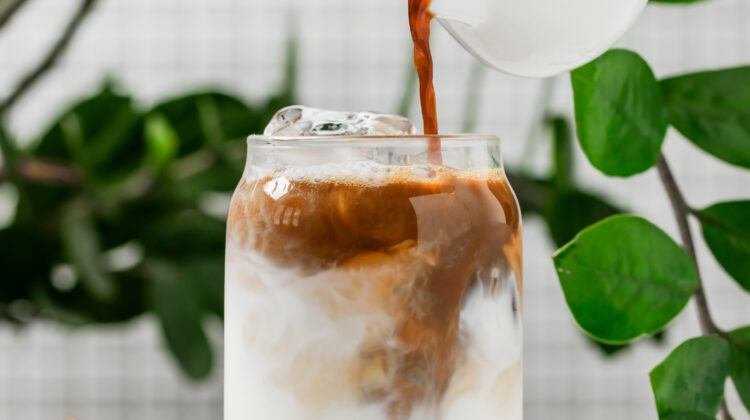
Photo by Jamurka
Cold, Caffeinated, Controlled
That first sip of iced coffee signals something more than hydration. It’s a sensory ritual: the clink of ice, the cool of condensation, the unmistakable jolt of purpose. Layered into that familiar cadence, cannabis brings a new kind of lift—measured, mellow, and made for the fridge. When paired with cannabis, it becomes more than a seasonal pick-me-up. It’s a format for controlled, high-functioning infusion.
This isn’t about swirling oil into a glass and hoping for the best. It’s about applying modern emulsification techniques to a familiar format. The result is a shelf-stable, make-ahead, measurable edible that doesn’t melt in a glovebox or crumble in a pocket. It’s cold brew, but optimized—for effect, flavor, and function.
While cannabis coffee might feel novel in the U.S., functional beverages have long been normalized abroad. In Japan, the world’s proving ground for beverage innovation, vending machines and convenience stores have lined their shelves with enhanced coffees for decades. These aren’t niche products—they’re everyday items designed for energy, clarity, digestion, or calm. Products there often blur the line between stimulant and supplement, treating functional ingredients as fundamental rather than novel. That lineage helps contextualize this new category: not as a gimmick, but as the next step in beverage utility.
Cannabinoids and Caffeine: Co-Function in the Brain
Cannabis and caffeine have long been misunderstood as contradictory substances—one sedating, the other stimulating. But the interaction between them, particularly at low to moderate doses, is far more synergistic than counteracting.
Caffeine works by blocking adenosine receptors, thereby reducing fatigue signals and promoting increased dopamine and norepinephrine release. THC binds primarily to CB1 receptors in the endocannabinoid system, which adjusts everything from sensory input to mood and memory. Where caffeine sharpens focus, THC softens reactivity. In tandem, the two can support a mentally engaged but emotionally leveled state.
This synergy is context-dependent. Dosage, tolerance, and delivery methods all play a role. But for consumers seeking sustained energy without overdrive, the combination of cannabis and caffeine—delivered in a fast-acting, precisely dosed format—offers a credible alternative to both alcohol and high-dose edibles.
Infusion Technology: Why Nanoemulsion Matters
Cannabinoids dissolve in fats, not water. Without intervention, they float, separate, and resist uniform distribution. That’s not just a flavor issue—it’s a dosing problem. Nanoemulsions solve this by reducing cannabinoid oil droplets to nanometer-scale particles, typically between 20 and 200 nanometers. At this size, cannabinoids remain suspended in liquid, absorb more efficiently, and activate more quickly in the body.
These very small, evenly-sized particles are created through high-pressure methods or sound waves. The result is a water-compatible THC format with faster onset that the body can absorb more readily. In beverages, it means precise dosing and shelf stability. This is crucial for any product designed to be stored, transported, or served over ice.
Market Context: Trends, Behavior, and Timing
In 2023, U.S. cannabis beverage sales surpassed $290 million. Brightfield Group forecasts global revenue exceeding $2 billion by 2026. The most rapid growth is coming from fast-acting, microdosed beverages—particularly in familiar formats like coffee and seltzer.
These shifts mirror deeper consumer behavior changes. Among Gen Z and Millennials, cannabis is frequently replacing alcohol in both social and solo contexts, according to research by New Frontier Data. Morning microdoses. Post-work resets. Low-key focus. Instead of gummies or baked goods, many users are turning to cannabis products that reflect their real routines. Iced coffee, already the dominant cold ready-to-drink beverage in the U.S., offers an ideal canvas.
This isn’t about novelty. It’s about precision, portability, and alignment with how people already live. And with commercial emulsification technology, the market is positioned to support that evolution.
Cannabis-Infused Iced Coffee
A practical infused iced coffee doesn’t require syrup or gimmicks. It requires three core components: a high-quality cold brew base, a dilution liquid, and a precise infusion.
Cold Brew
Base Recipe (Yields ~32 oz concentrate)
Ingredients:
1 cup coarsely ground coffee
4 cups cold, filtered water
Equipment:
French press or mason jar
Cheesecloth or fine mesh sieve
Instructions:
Combine grounds and water in a container, ensuring full saturation.
Steep 12-18 hours at room temperature or in the fridge.
Strain thoroughly using a French press. Alternatively, use a strainer lined with cheesecloth to strain the coffee into a mason jar.
Store concentrate in the fridge for up to seven days.
Single-Serving (8 oz) Formula
4 oz cold brew concentrate
4 oz milk or water
5–10 mg nanoemulsified THC
Ice
Combine cold brew and liquid of choice. Add THC drops and stir thoroughly to integrate. Pour over ice.
For aromatics, express citrus oils over the surface or dust with spice. For batching, combine cold brew and THC (no milk) for up to four days ahead and refrigerate.
Why it Works
Every variable in this format supports functionality. The cold brew maintains emulsion integrity. The nanoemulsion enables fast, predictable onset. The 1:1 dilution ensures flavor without sacrificing strength. Even the aromatics aren’t mere decoration. They engage the olfactory system through terpene-adjacent compounds. This enhances both perception and effect. Citrus oils, particularly, complement cannabis terpenes like limonene and pinene, while spices can boost the overall sensory experience.
Unlike chocolate or gummies, this beverage holds up across conditions. It travels, it stores, it adapts. It supports both solo and social use. And it meets the user where they already are—in a morning routine, in a work break, in a functional headspace.
The Stakes of the Sip
Fast-acting cannabis products are reshaping not just what consumers use, but how and when they use it. Infused iced coffee signals a turning point where cannabis becomes less about escape and more about enhancement. Less about novelty, more about integration.
This matters because it opens the door to a new kind of cannabis culture—one built around clarity, not confusion. One where the format supports the function, and the ritual supports the result. Infused coffee isn’t the end game. It’s the blueprint.
Leave a Reply