

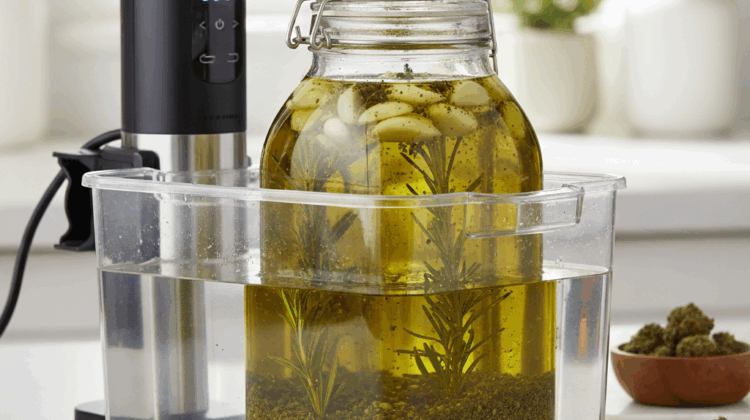
Photo: AI Generated
Before sous-vide, cannabis cooking was mostly educated guesswork. Flower went into a stockpot with butter, heat was kept “low” (whatever that meant on the dial), and the result was a mystery. Some batches barely registered. Others sent dinner guests into time-warp naps. Flavor was hit or miss; terpenes rarely survived the trip.
Sous-vide—French for “under vacuum”—is a method where food is sealed in a bag or jar and heated in a precisely controlled water bath. Instead of chasing a stovetop’s unpredictable lows and highs, just pick a temperature and it stays there for hours without budging. For cannabis, that means two things: predictable potency and protected flavor. THC activates at the right pace without scorching, and terpenes, the compounds that give cannabis its aroma, stay locked in.
The result is an infusion that’s not just consistent, but better-tasting. And with a $60 countertop circulator and a pot of water, it’s as easy to pull off at home as it is in a professional kitchen.
Why Sous-Vide Works for Cannabis
Cannabis is sensitive. Cannabinoids need very specific temperatures to activate and bind to fat. Terpenes, the aromatic compounds that define a strain’s character, are even more fragile. Overshoot, and they’re gone. Undershoot, and cannabinoids remain inactive.
Sous-vide thrives in that precision zone:
- Tight control—Holds temperature within a fraction of a degree.
- Even heat—No hot spots, no scorched oil.
- Odor control—Vacuum bags or jars contain aroma.
- Scalability—Works for one jar or a multi-liter batch.
- Repeatability—Once dialed in, the process delivers identical potency and flavor every time.
The Science: Decarb, Extraction, and Terpene Care
Raw cannabis contains THCA and CBDA—the acidic forms of THC and CBD. Heat triggers a process called decarboxylation, which converts THCA into THC and CBDA into CBD. While THCA and CBDA may offer some therapeutic effects in their raw form, such as potential anti-inflammatory or neuroprotective benefits, they are not intoxicating. Decarbing is what unlocks the familiar “high” from THC and the full range of CBD’s active effects.
The decarb sweet spot is generally between 230–240°F. Timing can be adjusted for flower, trim, or concentrate.
Once activated, cannabinoids dissolve into fat. Sous-vide keeps that fat at a terpene-friendly temperature for hours without overshooting. According to experts at The Press Club:
- Myrcene (earthy, herbal) starts volatilizing around 150°F.
- Limonene (citrus) boils at ~349°F but can degrade with prolonged high heat.
- Caryophyllene (peppery) tolerates more heat but retains more complexity when treated gently.
Preserving terpenes means the infusion doesn’t just “work”—it smells and tastes like the plant it came from.
Infused Olive Finishing Oil
Bright, peppery, and perfect for drizzling—this sous-vide method keeps delicate flavors intact while delivering precision dosing.
High heat easily damages olive oil’s fruity, grassy notes. The sous-vide bath’s exact temperature control protects those aromatics while fully activating and extracting cannabinoids. This allows for a clean, vibrant oil instead of the slightly “cooked” flavors from stovetop infusions
Start-to-finish: about 5-6 hours
Yields approximately 1 cup of oil..
Ingredients and tools:
7 g cannabis (per cup / 240 ml of extra-virgin olive oil)
1 cup extra-virgin olive oil
Mason jar with lid (finger-tight) or vacuum-seal bag
Sous-vide circulator and container
Cheesecloth or fine-mesh strainer
Directions:
Weigh and coarsely grind the cannabis; too fine and it clouds the oil.
Place cannabis and olive oil in a jar or bag. Seal.
Submerge in a sous-vide bath at 203°F for 90 minutes, then reduce to 185°F for 2–4 hours.
Cool slightly. Strain through cheesecloth or fine-mesh strainer into a clean, airtight container. Label.
Drizzle over roasted vegetables, burrata, or grilled bread; swirl into soups; or finish pasta just before serving. A teaspoon is a good starting serving—see dosage formula below.
To store, keep in a cool, dark place for up to a month; refrigerate for longer storage.
Dosage formula:
(Grams × THC% × 1,000) × 0.6 ÷ Total ml = mg THC/ml.
Convert to teaspoons or tablespoons for cooking.
After nailing one infusion, the real magic starts with variety. The beauty of the sous-vide method is that it works across almost any fat, from rich ghee to delicate olive oil. Swapping the base fat changes not just the flavor, but the dishes it pairs with—opening the door to a whole toolkit of infusions for different cuisines and moods.
Fat choices:
- Coconut oil for vegan desserts, curries, energy bites.
- Ghee for earthy mains, flatbreads, roasted vegetables.
- Olive oil for salads, dips, marinades.
- Neutral oils for sauces or baked goods that need minimal added flavor.
A single infused fat can work across several recipes. For example, an olive oil infusion can go into dressings, hummus, and roasted vegetables in the same menu cycle.
One of the easiest ways to integrate cannabis into everyday cooking is through finishing oils. These concentrated, infused fats are added at the end so potency stays intact.
Examples:
- Basil oil over pasta or pizza.
- Rosemary oil over roasted potatoes.
- Chili oil for dumplings or noodles.
This approach lets one infuse specific portions of a dish. This is useful when not everyone at the table is partaking.
From Countertop to Community
Sous-vide cannabis infusions aren’t just a trick for competition-level chefs. They’re a tool for anyone who wants consistent and flavorful edibles. For serious home cooks, it’s a way to stop wasting good cannabis on bad batches. For small food businesses, it’s a method that scales up without sacrificing control.
It’s also bridging the gap between cannabis enthusiasts and people who just want their infused food to taste good and work every time. The conversation is moving from “How strong is it?” to “What strain did you use?” and “What fat did you pair it with?” Sous-vide is helping make that possible.
Leave a Reply